
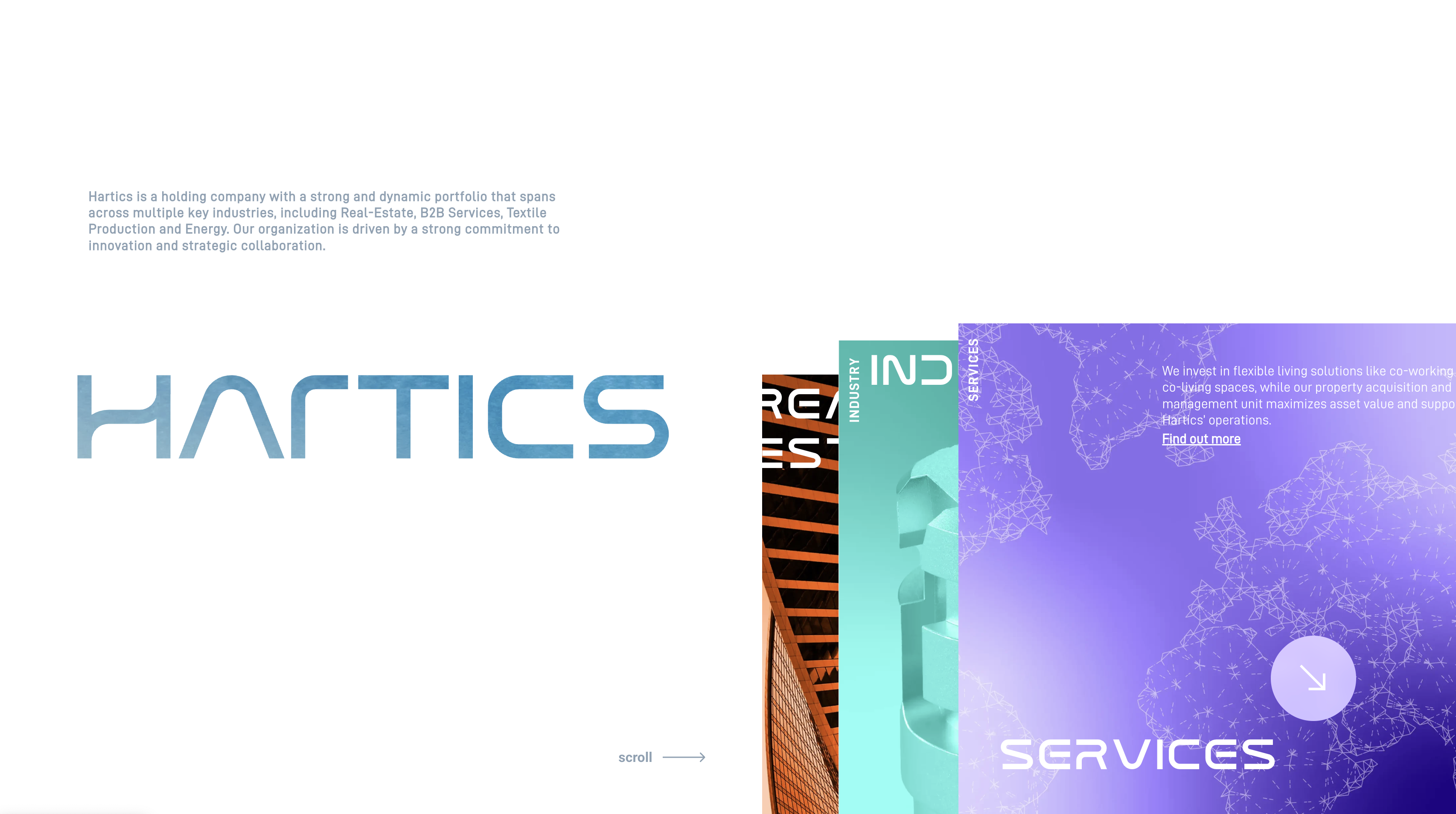

Hartics operated across diverse sectors including textile, energy, automotive, and real estate, but lacked a unified strategic and communication structure capable of coherently representing the group’s investment vision. The absence of portfolio architecture and institutional communication standards created fragmentation between companies and weakened external perception of the group’s strategic maturity and long-term positioning. Additionally, the group lacked documented proof structures capable of reinforcing market legitimacy, operational depth, and investment credibility across sectors traditionally driven by trust and reputation.
nineyards was engaged as a strategic communication and structural advisory partner to redesign both the Hartics brand and the way the investment ecosystem was organized and presented. We developed a new corporate identity positioned to reflect a more contemporary and disruptive investment posture while maintaining the seriousness and discipline expected within legacy sectors. Alongside the brand transformation, we restructured the portfolio organization logic, helping define clearer relationships between business units, investment domains, and institutional positioning. We also identified the absence of documented execution proof as a strategic weakness. In response, we developed and structured business case documentation systems designed to publicly reinforce the group’s operational legitimacy, cross-sector capability, and investment credibility. This included defining how projects, interventions, and portfolio companies would be presented through a more structured institutional narrative aligned with long-term governance principles.
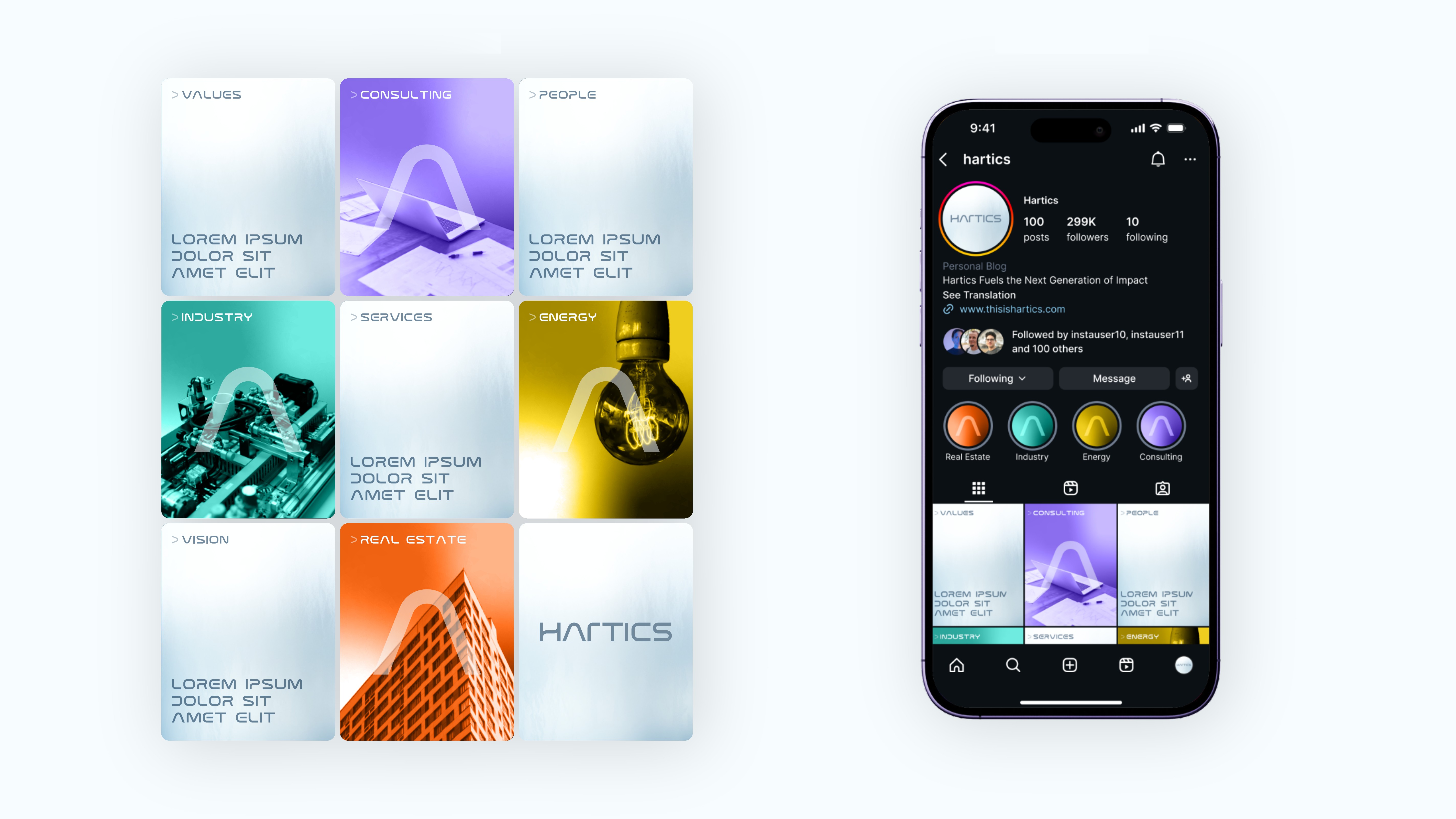
Hartics established a more coherent and credible institutional presence across its investment ecosystem. The new architecture strengthened strategic clarity between sectors, improved portfolio perception, and created a more scalable communication framework capable of supporting future expansion. The introduction of structured business case documentation reinforced market legitimacy and allowed the group to communicate operational depth and investment maturity with greater authority and consistency.


Delivery
Create
inspire
Design
Delivery
Create
inspire
Design
Delivery
Create
inspire
Design
Delivery
Create
inspire
Design
Delivery
Create
inspire
Design
Delivery
Create
inspire
Design
info@nineyards.pt


-
-
-
-
-
-
-
-